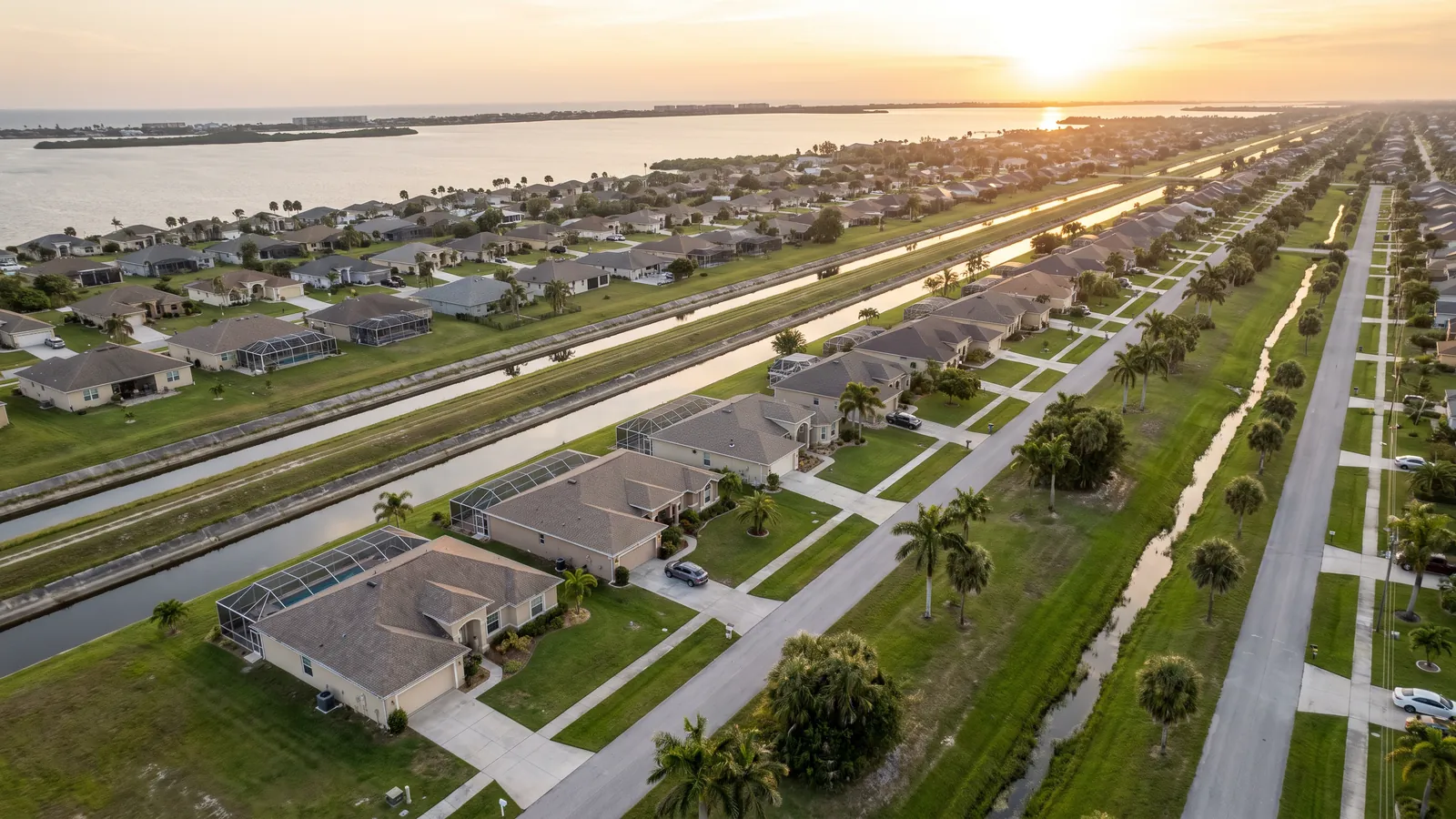
Palm Bay — all four quadrants
NE with Port Malabar, SE with Bayside Lakes, SW with the Compound, NW with Lockmar and Emerald Lakes. ZIP codes 32905, 32907, 32908 and 32909.
Palm Bay units →Scope: driveways; culverts and swale aprons; patios and lanai slabs; new pool decks and deck resurfacing; stamped finishes; shed, boat and RV pads; foundation slabs; repair, leveling and tear-out. Coverage: Palm Bay and the rest of the Space Coast. Method: a locally run, licensed and insured crew compacts the subgrade, plans the drainage, files the Public Works permit, and gives you an itemized figure on paper before any concrete is ordered.
Licensed and insured · On file with Palm Bay Public Works and the Building Division · Site measured at no charge · Itemized price on paper before concrete is ordered
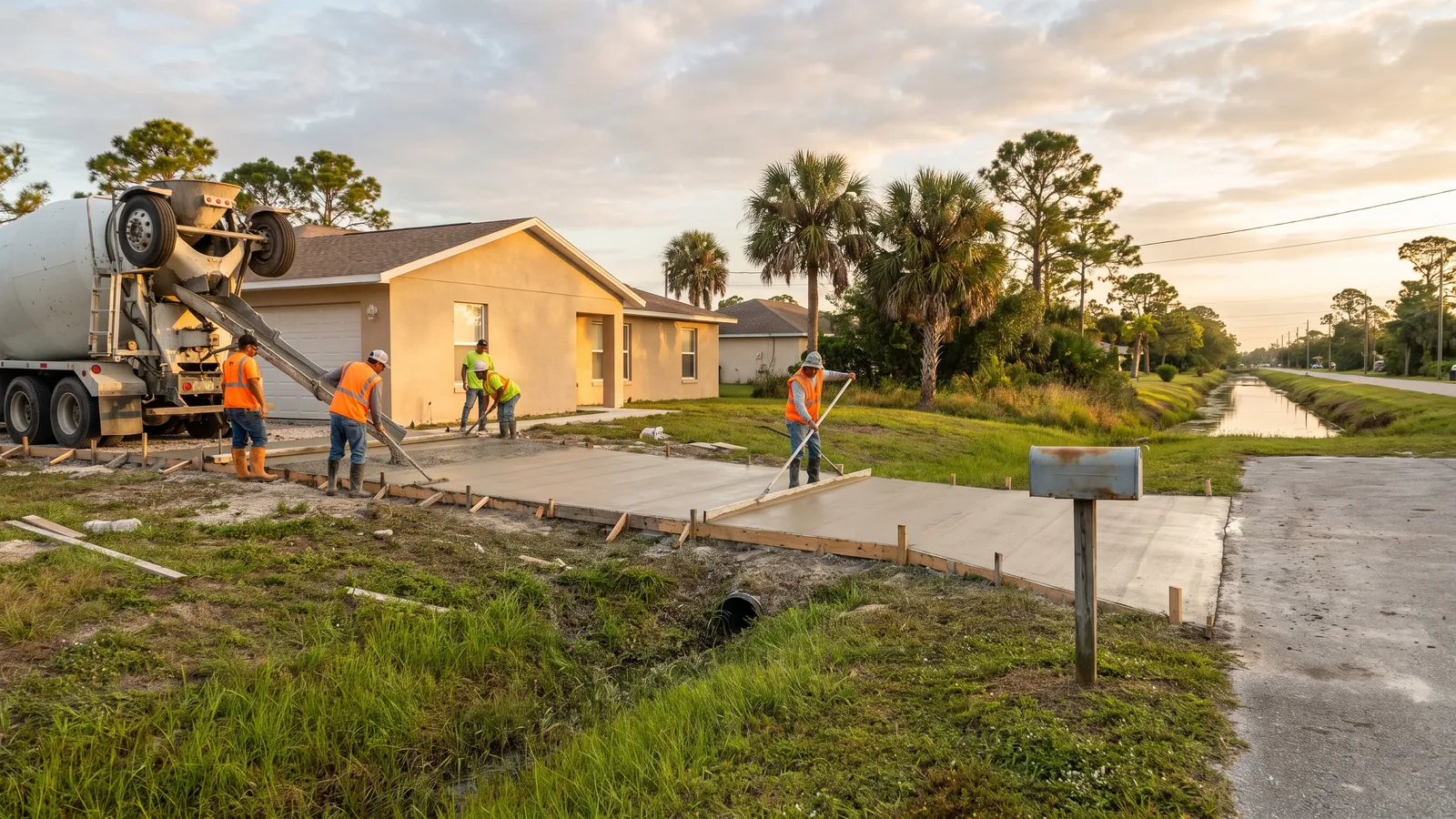
New pours, replacements and widenings from garage slab to swale, on sand our own crew compacts.
Driveway work →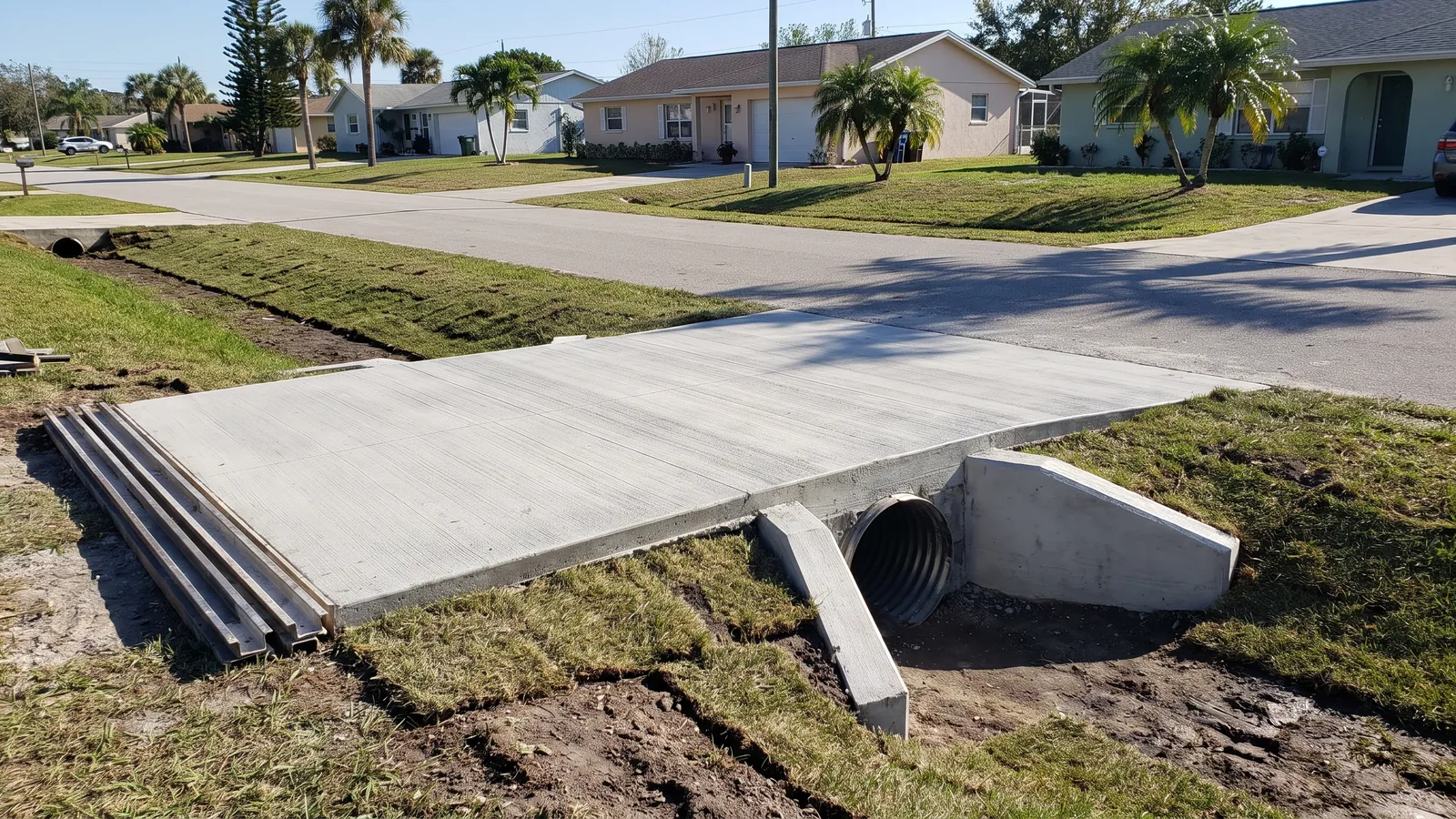
Culvert pipe, mitered end sections and a reinforced apron built to the city specification, then permitted and inspected by Public Works.
Culverts & aprons →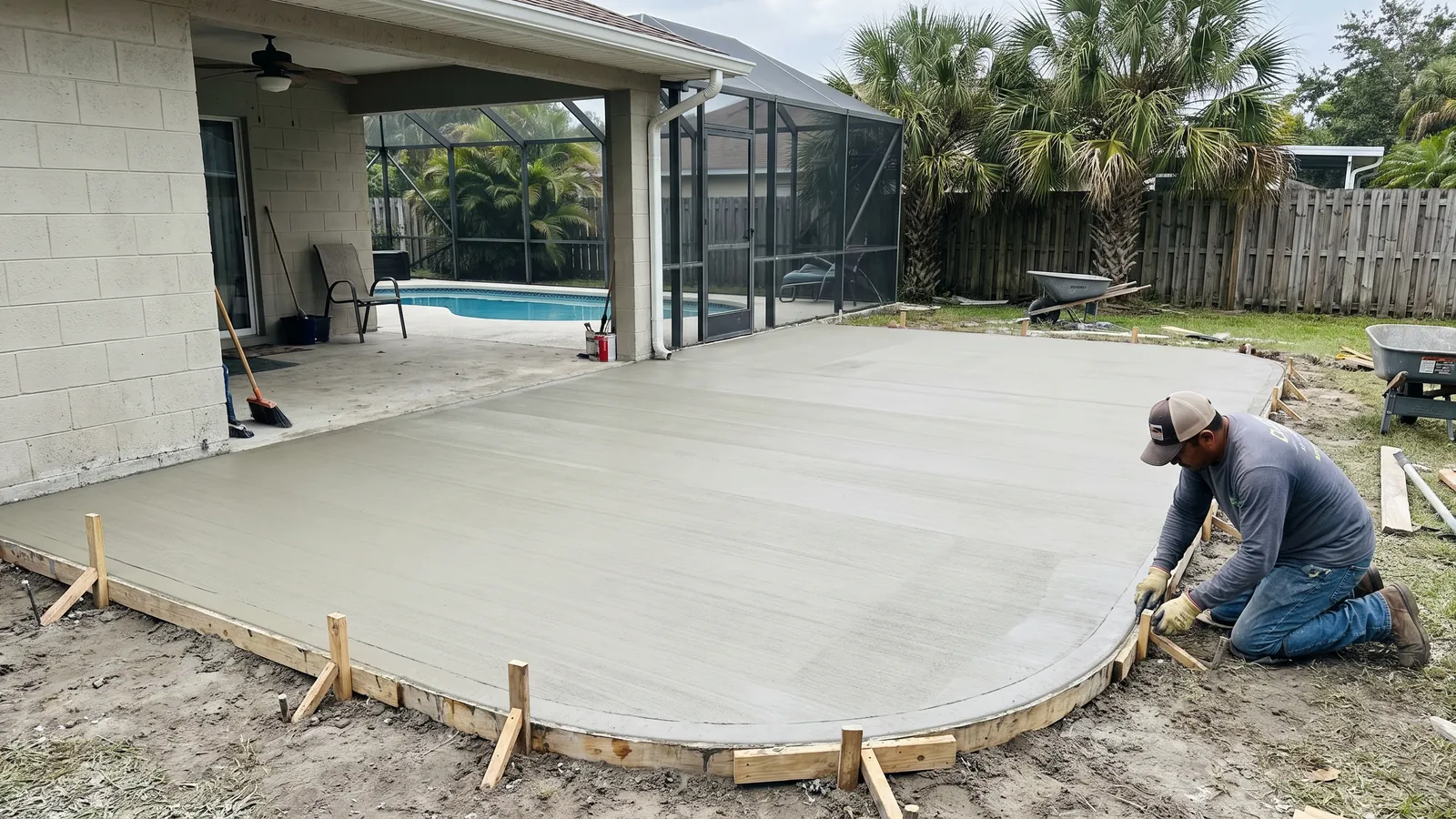
Slabs for lanai extensions and screen rooms with column footings, plus pads for summer kitchens and hot tubs.
Patios & lanais →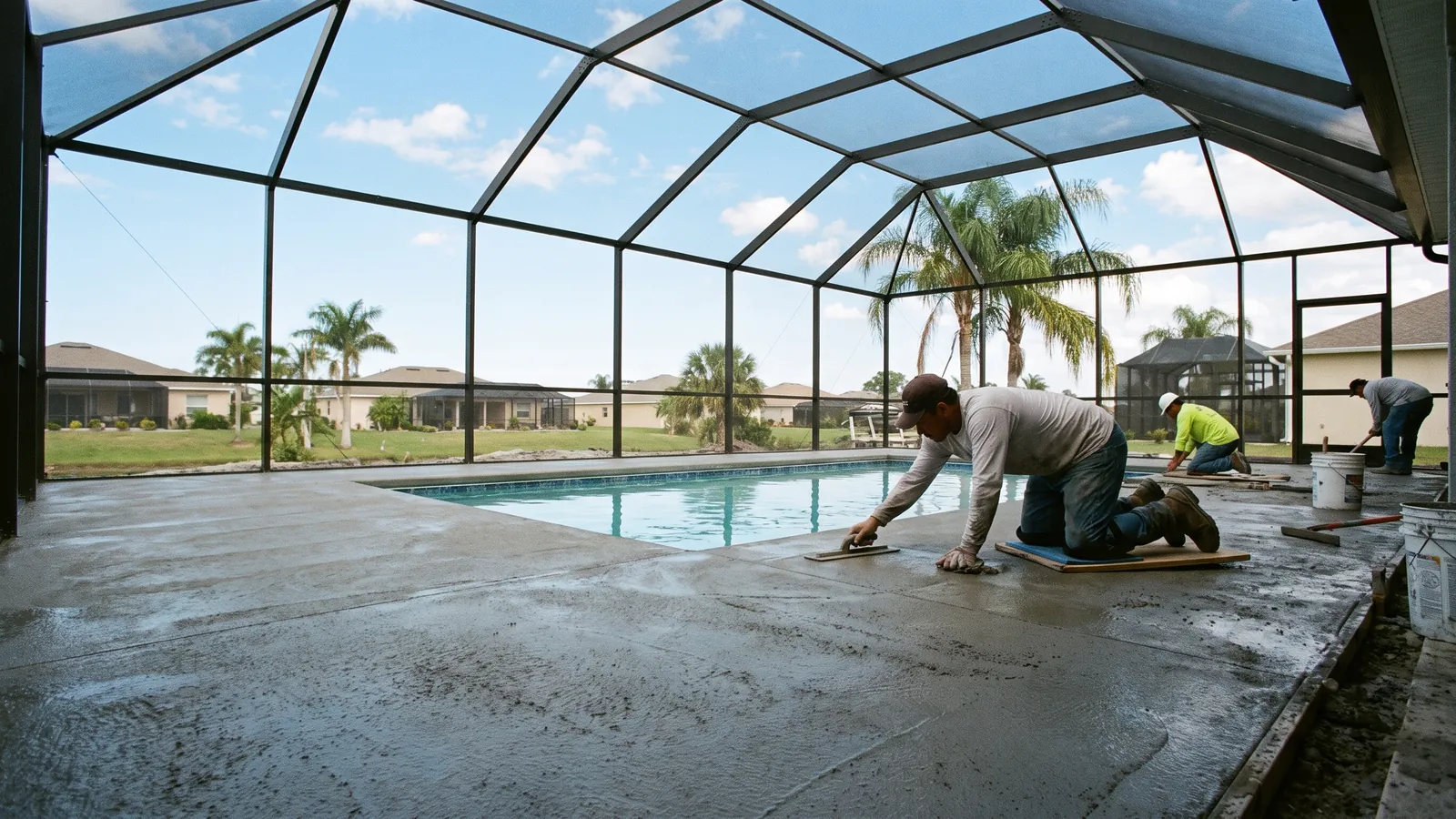
New textured decks inside the screen cage, tight to the coping, sloped away from the water and sealed against UV.
Pool decks →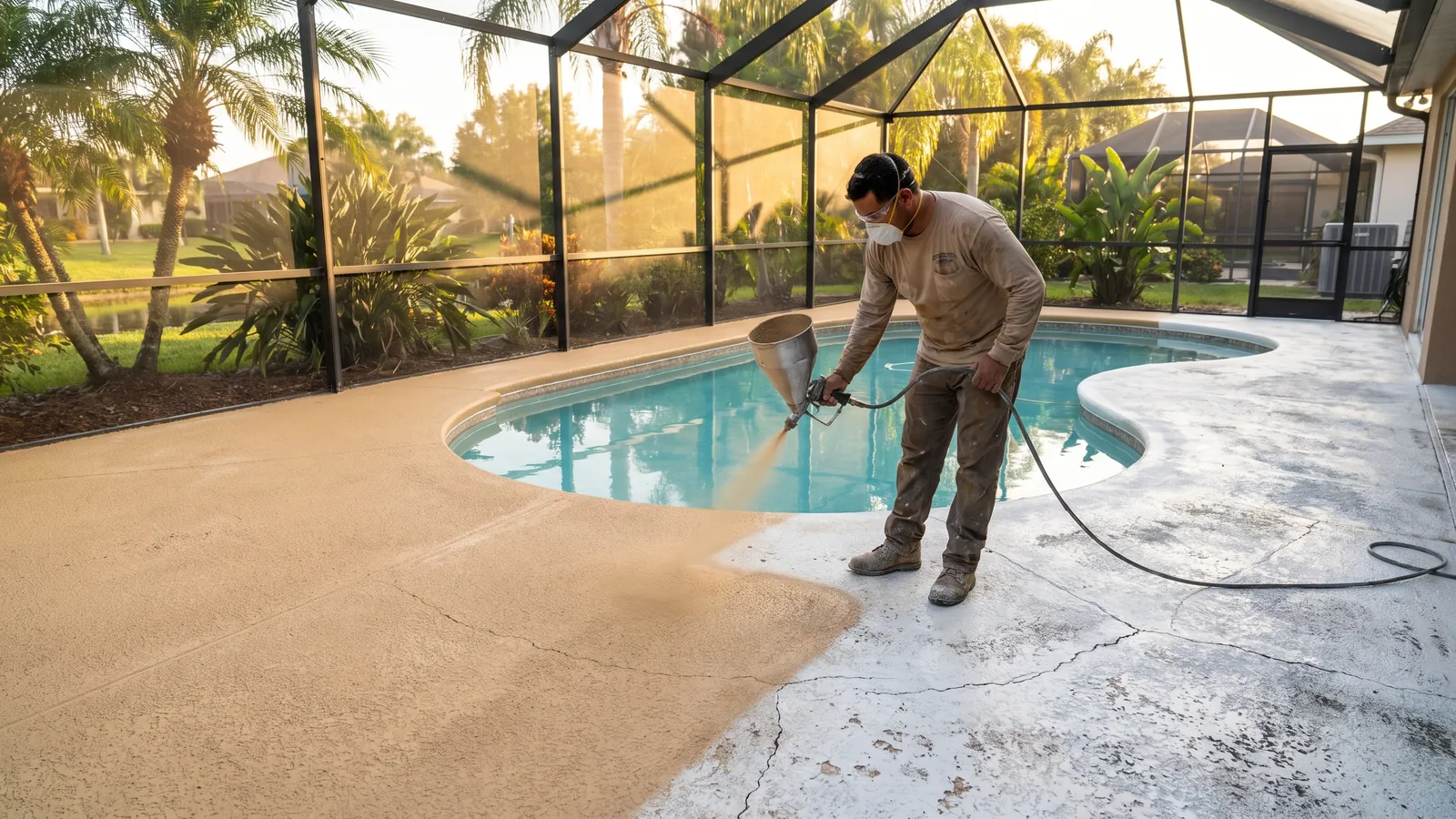
Knockdown or cool-deck overlay on a structurally sound slab: the lowest-cost route to a new deck surface.
Resurfacing →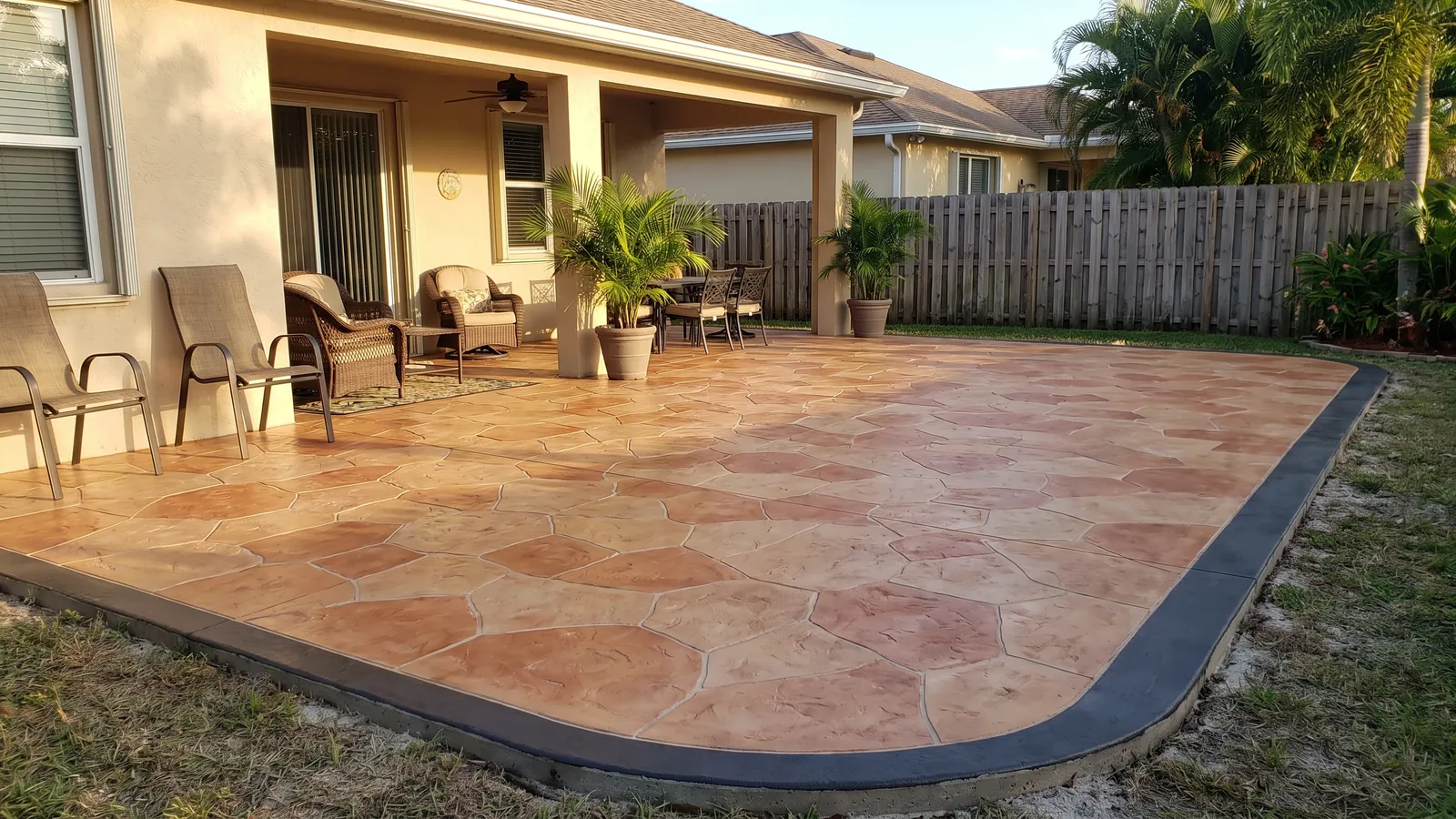
Flagstone, slate, plank or cobble patterns, integral color, contrasting borders and a UV-rated sealer.
Stamped work →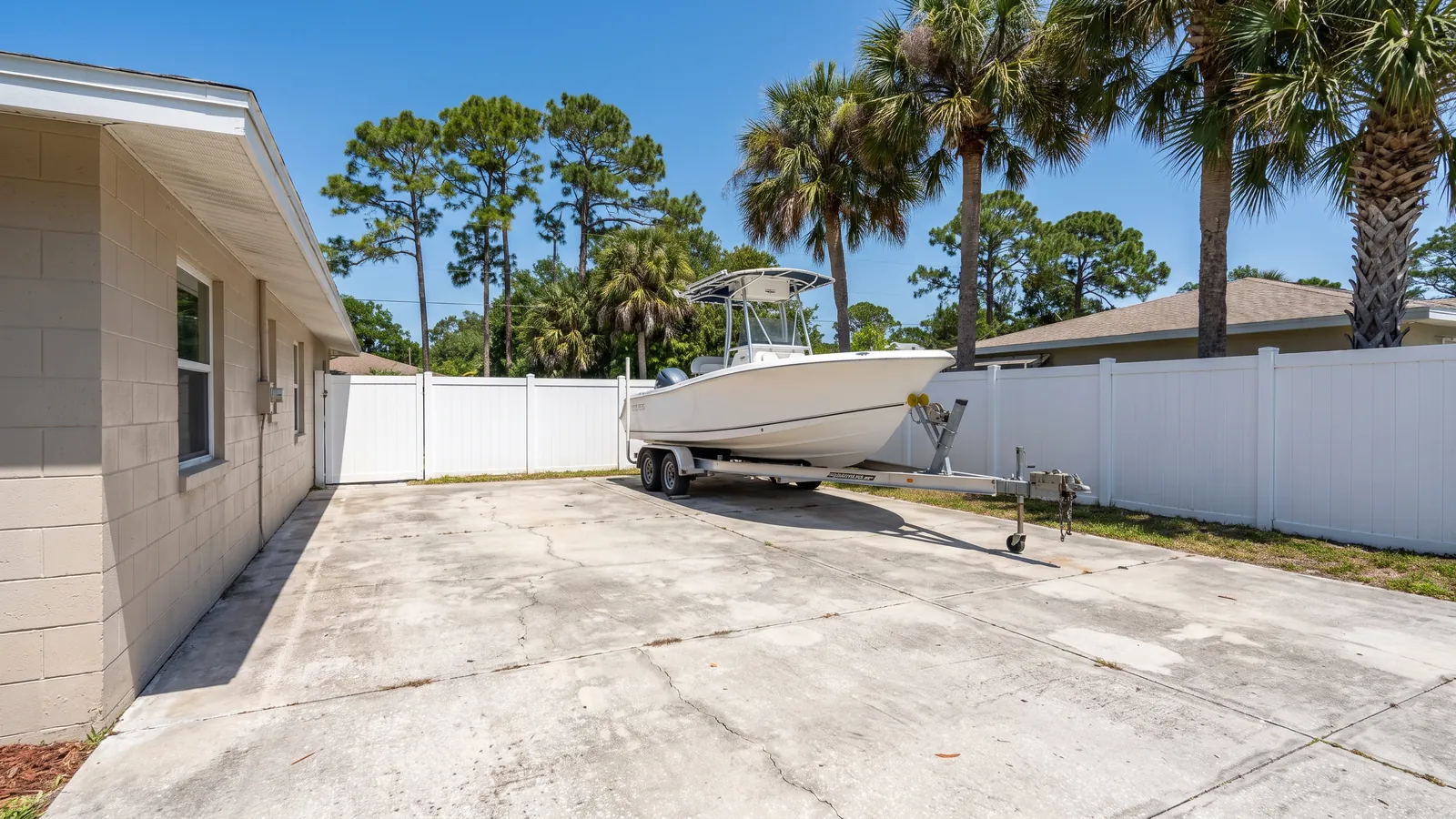
Reinforced pads with turned-down edges and anchor bolts, including the side-yard boat pad found on so many Palm Bay lots.
Pads →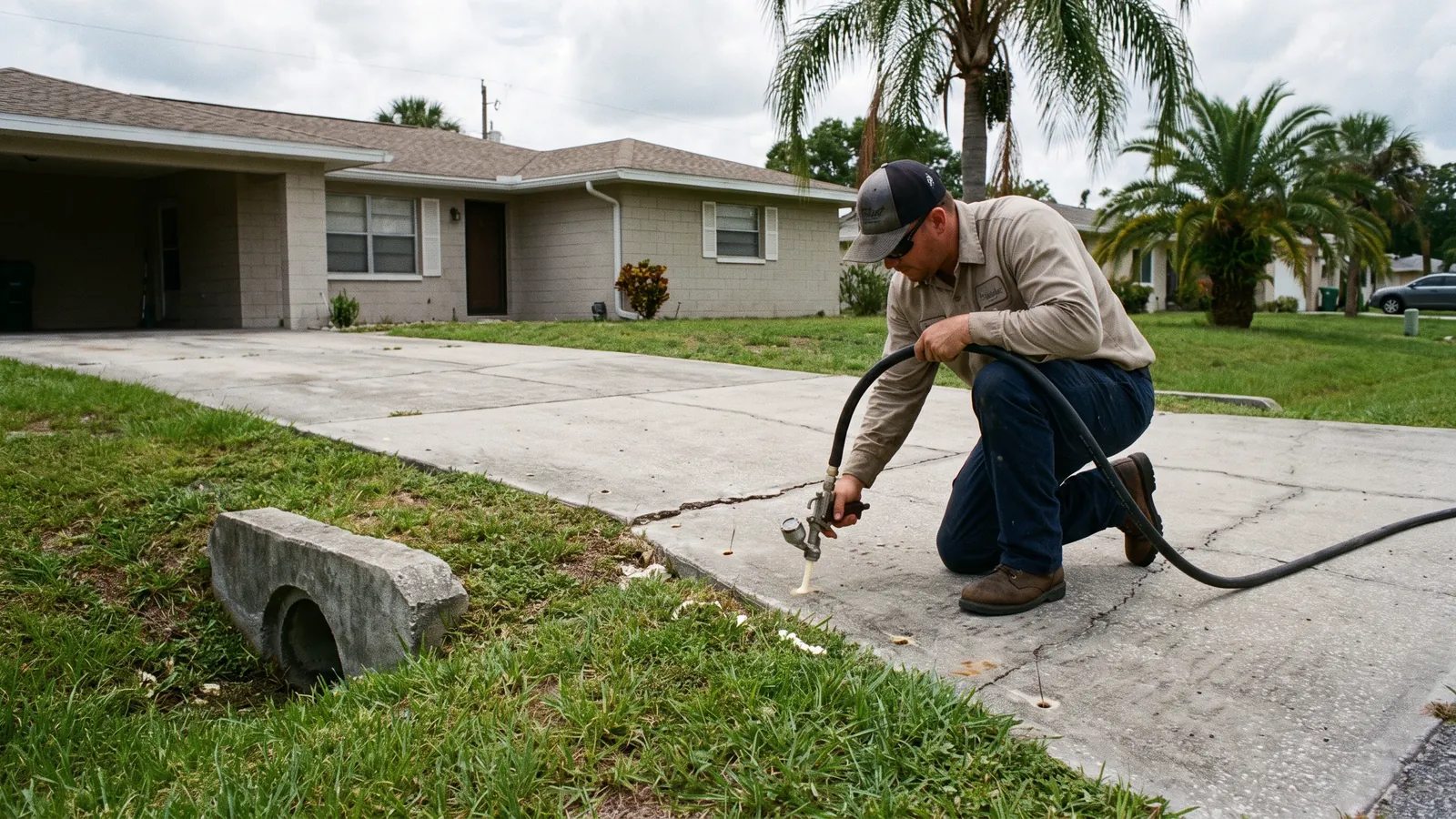
Foam lifting for sunken aprons and decks, replacement of failed sections, crack and spall repair, and correction of whatever caused it.
Repair →Cause: silted culvert ends, an eroded swale or a neighbor's fill diverts water beneath the apron, and the water carries the sand away. Result: about two inches of drop at the road edge and a crack over the pipe. Fix: lift or replace the apron, then correct the drainage.
Culverts & aprons →The first GDC driveways in the northeast units are thin and carry no steel. Fifty years of laurel-oak roots, sprinkler water and Chevys have cracked them through. Patching does not hold; they need replacement over a base that is compacted properly this time.
Driveway replacement →Symptoms: chalking cool-deck, hairline cracks, an open joint at the coping. Where the slab below is sound, a knockdown overlay delivers a new surface for about one third of what a new pour costs.
Resurfacing →Large SW and Compound lots often have no pad at all. A side-yard pad 5 to 6 inches thick, reinforced, with turned-down edges, carries a center-console or a fifth wheel without settling. A shed slab with anchor bolts meets the Building Division inspection.
Pads →Most lots in the city are poorly drained flatwoods sand on the flat grid General Development Corporation cut through the 1960s and '70s. In the wet season the water table may sit one to two feet under the lawn. Place a slab on that sand without compaction and without slope, let a downspout or the swale undermine one side, and it will move. Thousands already have in Port Malabar, Lockmar and the older Emerson units. Our section, surface to subgrade:
Fiber-reinforced mix at 3,000 psi. Four inches across the lot; five to six at the apron and beneath boats, RVs and generators. Broom texture for traction when wet.
Welded wire set on chairs, or #3 and #4 bar on a grid, positioned at mid-depth where it carries load, rather than resting on the sand.
Muck and loose fill excavated; clean sand placed in lifts and run with a plate compactor; graded at roughly ¼" per foot of fall toward the swale.
By September it can be 12–24" below grade. The base is held above that level, downspouts discharge clear of the slab, and the swale is kept flowing. Service life depends on the water more than on the mix.
Measurements, a drainage check covering swale and downspouts, and a discussion of what you want built.
Line items for demolition, base, thickness and steel, finish, joints, sealer and permit. Valid 30 days.
Public Works or Building Division permit filed when required; existing slab removed; subgrade compacted; forms and steel placed; pre-pour inspection.
Mixer on site ahead of the heat and the afternoon storms. Placing, screeding, floating, brooming and jointing all finish that morning.
Walk on it after 24–48 hours, drive on it after 7 days, park the boat after 14. Final inspection requested, sealer applied, forms and debris removed.
Population: roughly 147,000 by the April 2025 estimate, against 119,760 at the 2020 census, which makes Palm Bay the largest city in Brevard County. Construction came in two phases: the GDC grid in the northeast during the 1960s–'80s, and the southwest build-out that has not slowed. Both phases generate our call volume.
General Development Corporation drew the street grid, swales and canals that still carry the city's stormwater. The oldest northeast driveways are in their sixth decade, and the swale crossing in front of each one is required: it is what keeps the street from flooding.
Approved by voters in November 2018 to rebuild Palm Bay's roads; more than 418 miles improved to date. Milling, reclaiming or rebuilding a street changes the road grade and the swale profile, so the apron frequently needs rework as well. How that affects your driveway.
The Public Works Driveway and Lot Drainage permit lapses after 90 days unless extended. It is issued with the city's pipe and grade specification and requires a pre-pour inspection and a final. We file it through the iMS portal, book both inspections and list the fee on your invoice.
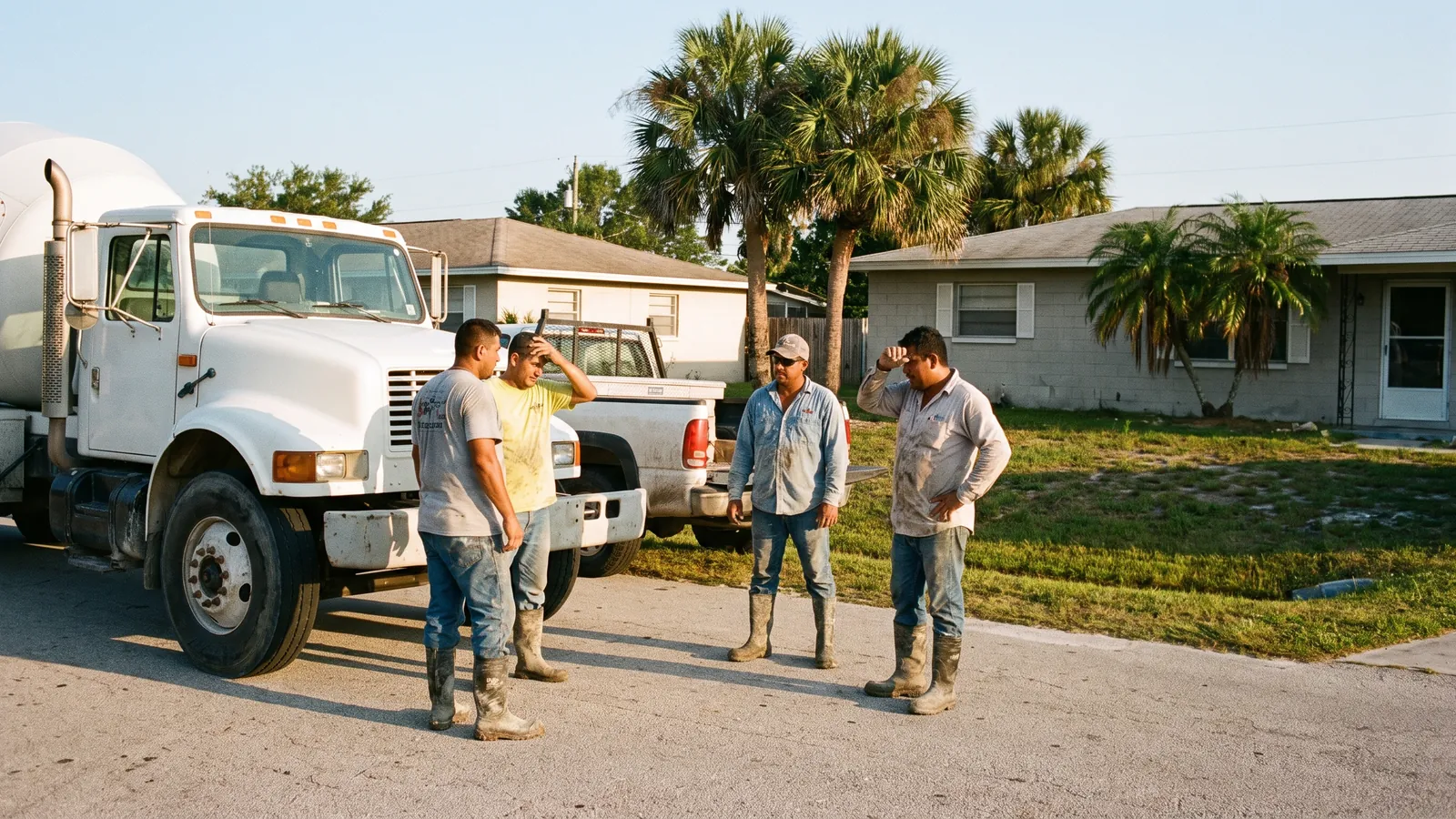
Our crews have poured in all four quadrants: canal lots off Port Malabar Boulevard, HOA streets in Bayside Lakes, new construction on Jupiter, Emerson and San Filippo, and Lockmar and Emerald Lakes homes off Malabar Road. Outside city limits: Melbourne, West Melbourne, the beaches, Malabar, Sebastian, Viera, Rockledge and Merritt Island. Specific local knowledge: which streets are on the GO Roads schedule, which units flood in a September storm, what the Public Works inspector checks at pre-pour, and when a Compound driveway calls for a truck able to handle a dirt road.
On each job: licensed and insured, permitted wherever code requires it, measured on site and priced on paper before concrete is ordered. A sound slab under a pool deck gets a resurfacing quote, not a replacement quote. An apron that needs only a foam lift and a culvert clean-out is quoted as exactly that.
NE with Port Malabar, SE with Bayside Lakes, SW with the Compound, NW with Lockmar and Emerald Lakes. ZIP codes 32905, 32907, 32908 and 32909.
Palm Bay units →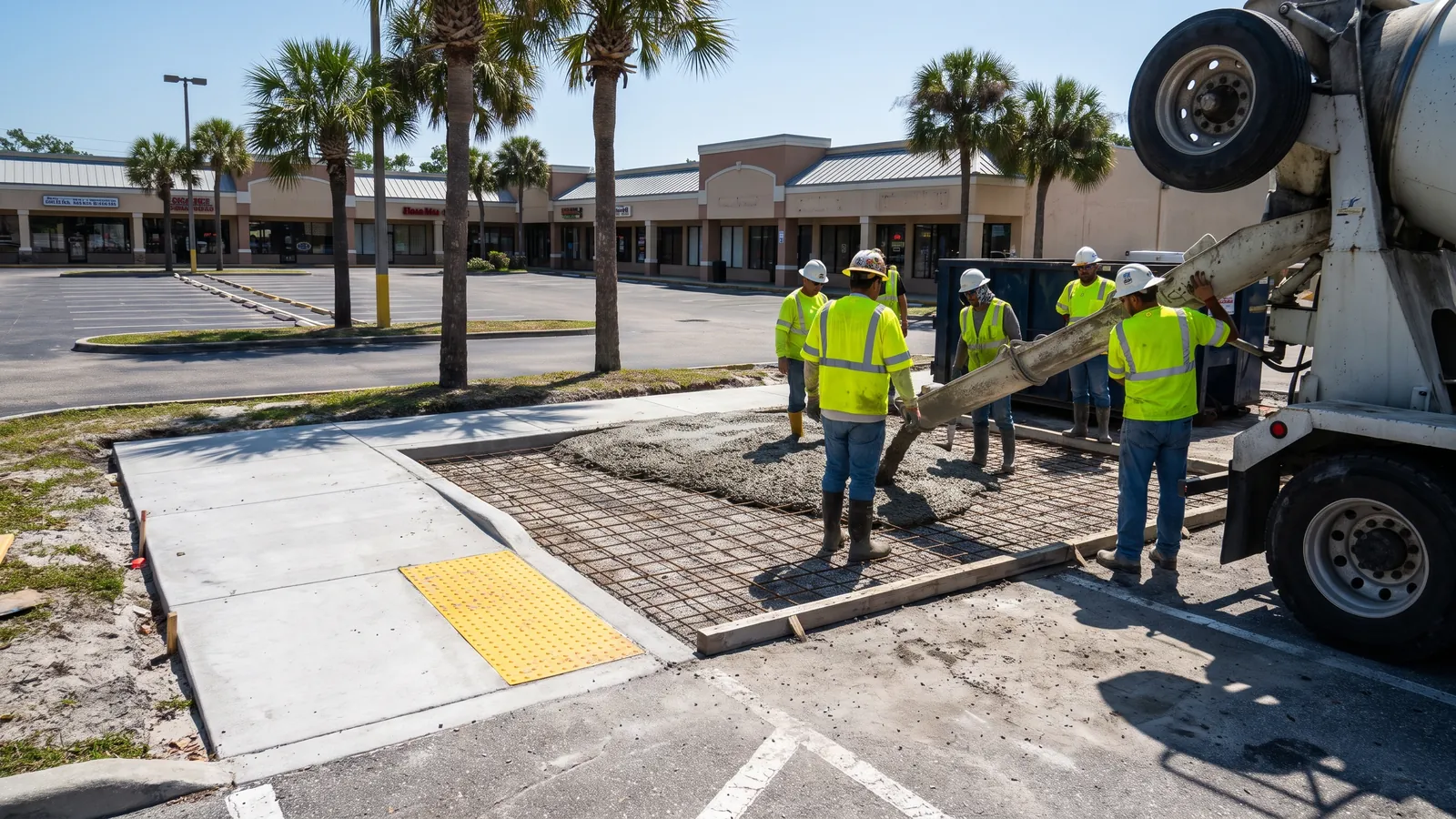
Brevard's second-largest city and its fastest-growing suburb, from the Eau Gallie arts district out to the new streets off Minton Road.
Melbourne work →North: Viera, Rockledge, Cocoa, Merritt Island. Barrier island: Satellite Beach down to Melbourne Beach. South: Malabar, Grant-Valkaria, Micco, Barefoot Bay, Sebastian and Vero Beach.
Every town served →Reference job: a two-car driveway of 500–650 sq ft, 4-inch slab, broom finish, fiber plus welded wire. At 2026 pricing that is about $4,800–$8,200 as new work, or $6,200–$10,500 as a replacement, which adds saw-cutting, haul-off and recompaction of the sand base before the new placement. A swale crossing with culvert pipe and mitered ends is roughly $2,400–$5,200 on top and requires a Public Works driveway permit. Stamping or color, a heavier slab on the boat side, a long run across a Compound lot, or a low corner where water ponds will each change the figure. All of it is listed line by line, on paper, before we book a mixer.
For anything inside the city right-of-way or an easement, yes: that means the apron, the culvert pipe and the swale. Palm Bay Code § 176.020 says a permit is needed to build, remove, alter or repair a curb, culvert, sidewalk or driveway within a city road. Public Works issues it under the name Driveway and Lot Drainage permit, through the iMS online portal, and attaches the city's pipe and grade specification. The permit lapses after 90 days. Inspections: pre-pour (code 7000) and final (code 7010). A patio or a shed pad on private land is a Building Division matter instead, and we settle which office applies before any job starts. We file the permit ourselves and it appears as an invoice line.
Usually the swale. General Development Corporation began laying out Port Malabar in 1959: a street grid, roadside swales and drainage canals that move rainwater to the Melbourne-Tillman canals, Turkey Creek and on to the Indian River Lagoon. Each apron spans that swale over a culvert pipe. Silt in the pipe ends, an eroded swale bank, or fill placed by a neighbor that blocks flow will send water beneath the apron. The water removes sand from under it, and the slab settles or snaps at the road edge. The repair is normally two jobs at once, drainage and concrete, and we do both.
Driveways, patios and shed slabs under cars and foot traffic: 4 inches of 3,000 psi mix over compacted sand. Boat pads, RV pads, generator pads and the road apron, where wheel loads concentrate: 5 to 6 inches with rebar. Subgrade outweighs thickness. The sand needs compaction in lifts, the base has to sit above the wet-season water table, and the edges must be protected from swale and downspout washout. Local slabs fail at those three points, so that is where most of our labor goes.
Yes. On the barrier island (Satellite Beach, Indian Harbour Beach, Indialantic, Melbourne Beach) and along the Indian River side of NE Palm Bay, salt air and spray driven in by storms corrode the reinforcing steel and pit the surface over a span of years. Three changes: a lower water-to-cement ratio, correct cover over the steel so chlorides take longer to reach it, and a penetrating sealer on the cured surface. The added cost is small. Ten years on, it separates a sound driveway from one that has the texture of coquina.
Yes, any hour, any day, and a person then calls you back. Most driveway work can wait. A slab that dropped beneath a vehicle, a pool deck separating from the coping, or an apron washed out in a storm is looked at the same day when the schedule allows.